Christmas Highland Cow Personalize
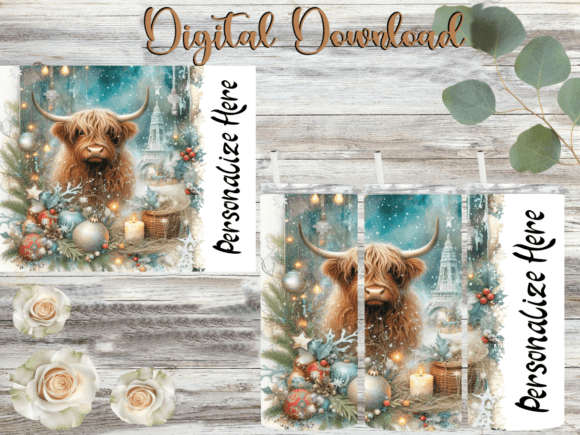
As someone who’s stitched hundreds of holiday designs—from delicate snowflakes on baby onesies to bold reindeer motifs on boutique sweatshirts—I opened Christmas Highland Cow Personalize with quiet curiosity. Not hype, not urgency—just the practiced pause before committing thread, time, and client trust to a new design asset. What I found wasn’t flashy, but it was *considered*: a warm, slightly whimsical Highland cow wearing a tiny tartan scarf and a sprig of holly, rendered in clean, confident lines. It doesn’t shout “Christmas!”—it smiles it. That subtlety is its first strength.
A Design That Feels Like a Handmade Promise
This isn’t a cartoon or a clipart knockoff. The proportions are balanced—the cow’s head is large enough to read clearly at 3”–4”, its eyes expressive without being cutesy, and the scarf adds just enough seasonal flair without crowding the silhouette. As an embroidery designer, I immediately saw how this would translate: the rounded body lends itself well to satin stitch contours; the holly sprig offers a natural spot for a small fill-stitch accent; the scarf’s folds suggest gentle running-stitch texture if digitized thoughtfully. But—and this matters—Christmas Highland Cow Personalize arrives as a JPEG only. That means it’s a starting point, not a plug-and-play embroidery file. You’ll need to digitize it yourself or hire a digitizer, especially if you’re planning dense stitching or layered applique.
Where It Shines (and Where It Needs Care)
I tested the concept by sketching how Christmas Highland Cow Personalize would live on real products. On a natural linen tea towel? Perfect—its earthy charm complements kitchen warmth and holds up beautifully at 3.5”. On a charcoal crewneck sweatshirt for a local boutique? Yes—but only if stitched with medium-weight cutaway stabilizer and matte polyester thread to avoid shine overpowering the cozy vibe. As a baby onesie design? Proceed with caution: the holly detail is small, and tight curves near the ears could snag during washing unless digitized with generous underlay and reduced stitch density.
It’s ideal for products where personality matters more than precision: embroidered patches for craft fairs, pillow covers for rustic nurseries, tote bags for Scottish-themed gift shops, or aprons for holiday baking kits. It’s less suited for high-detail applications like cap fronts (curved surfaces distort fine elements) or thin-knit t-shirts (where loose fill stitches might shadow through). And while the JPEG scales cleanly to 300 dpi, remember—resizing *before* digitizing is non-negotiable. Stretch it in your embroidery software instead, and you’ll risk jagged edges or collapsed details.
Real Talk for Etsy Sellers and Small Shop Owners
If you’re listing handmade items on Etsy—or prepping for a holiday craft fair—Christmas Highland Cow Personalize quietly elevates perceived value. Customers respond to authenticity, not busyness. This design feels hand-drawn, not algorithm-generated. That builds trust. When paired with quality stitching and thoughtful presentation (say, on a heavyweight cotton tote with matching tartan binding), it reads as intentional, not generic. But here’s the catch: because it’s JPEG-only, your finished product’s professionalism hinges entirely on your digitizing choices. A poorly spaced satin border or overfilled holly berry will undermine the design’s charm fast.
I recommend using Christmas Highland Cow Personalize in two ways: first, as a core design for your holiday collection (think “Scottish Christmas” bundles); second, as a customizable anchor—swap scarf colors, add initials in a simple block font below the cow, or pair it with a subtle “Merry & Bright” banner. Just verify licensing before selling digital versions or editable files—this JPEG isn’t licensed for resale as a standalone graphic.
Practical Notes from the Hoop
Before stitching your first piece:
- Test on scrap fabric first—especially if using textured weaves (like burlap blends) or stretchy knits. The cow’s rounded shape can pucker on unstable bases without proper stabilizer.
- Check thread color contrast on both light and dark backgrounds. Cream thread on oatmeal linen? Lovely. Same thread on navy twill? Nearly invisible. Try black or deep burgundy for definition.
- Review stitch density if digitizing yourself. Avoid heavy fill in the scarf—it’s a narrow shape and can stiffen the fabric unnaturally.
- Confirm hoop size early. At 4”, this fits standard 5x7 hoops comfortably—but shrink it below 2.5”, and the holly sprig risks becoming a muddy blob.
- Inspect corners and curves in your embroidery software preview. The cow’s jawline and ear tips are soft but defined—don’t let them blur into run-on stitches.
- Use printable mockups to show customers how it looks on actual products—not just white backgrounds. A realistic sweatshirt mockup builds buyer confidence faster than any description.
Final Thought: Charm With Craftsmanship
Christmas Highland Cow Personalize won’t win awards for complexity—but it doesn’t need to. Its strength is cohesion: a single, memorable image that carries mood, seasonality, and handmade warmth without clutter. For embroidery designers building a library of versatile, sellable assets—and for craft businesses curating holiday collections—it’s a smart, understated addition. Just remember: the JPEG is your sketch, not your stitch file. Your skill, attention to fabric behavior, and respect for the medium are what turn Christmas Highland Cow Personalize into something people proudly carry, gift, and keep long after the tinsel’s packed away.