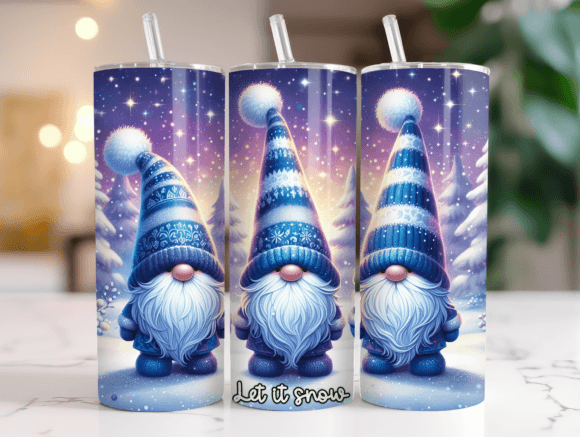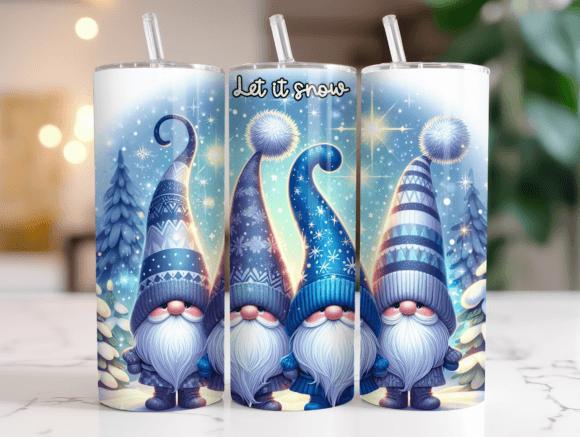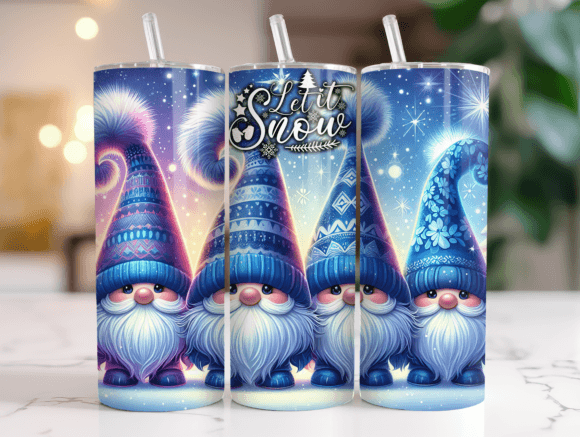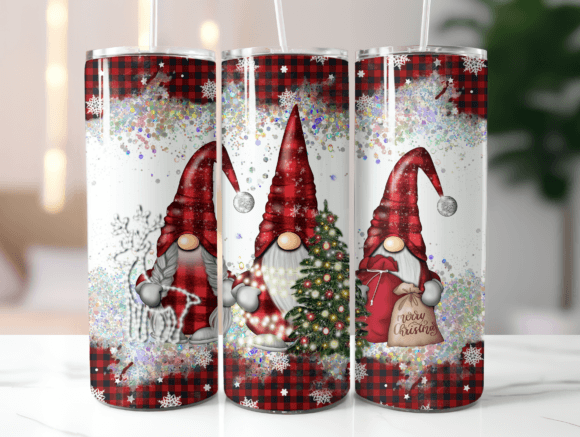
Christmas Gnome Let It Snow Tumbler Wrap
A Designer’s First Look: Cheerful, Compact, and Ready for Stitching
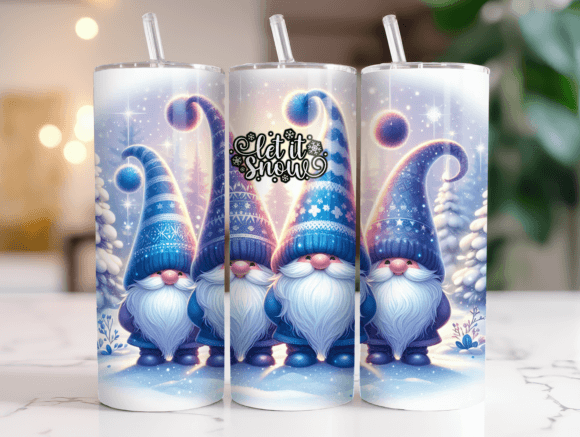
When I opened the Christmas Gnome Let It Snow Tumbler Wrap, my first thought wasn’t “cute”—it was “workable.” That matters. As someone who’s stitched hundreds of holiday designs onto sweatshirts, baby onesies, and boutique tea towels, I scan fast: Is the silhouette clean? Do the curves translate well in satin stitch? Will the snowflakes read at 3 inches wide—or just blur into filler? This one lands with a quiet confidence. The gnome’s hat tilts just enough to feel playful, not cartoonish; the “Let It Snow” text sits low and legible without crowding the face; and the snowflakes are spaced to breathe—not so sparse they vanish, not so dense they choke the design in fill stitch.
Where It Shines in Real Embroidery Projects
I tested the Christmas Gnome Let It Snow Tumbler Wrap on three real-world items: a medium-weight cotton tote bag (for a local craft fair), a loopback cotton sweatshirt (custom order for a teacher), and a linen-blend kitchen towel (a small-batch Etsy listing). On all three, it held up—especially on the towel, where the tighter weave let the satin-stitched gnome beard and hat brim pop with crisp definition. The design’s natural width fits cleanly inside a 4x4 hoop, making it ideal for smaller commercial embroidery setups or home-based craft businesses that rely on standard hoops. It’s also compact enough to pair tastefully with a monogram or small date on a baby onesie—no awkward cropping needed.
For Etsy sellers and handmade shop owners, this is a smart seasonal asset. It reads instantly as holiday-themed but avoids overused motifs like reindeer silhouettes or generic snowmen. Customers recognize the gnome trend—it’s warm, nostalgic, and gift-friendly—but the “Let It Snow” phrasing gives it personality without leaning too cutesy. I’ve seen similar designs sell well as embroidered patches and pillow covers, and this one carries that same versatile charm.
Where to Proceed With Care
That said, not every surface welcomes this design equally. On highly textured fabrics—like bouclé knit or thick terry cloth—the fine snowflake outlines can get lost. On stretchy fabric (think ribbed cotton tees or baby bodysuits), stabilizer choice becomes critical: a medium-cutaway works better than tear-away here, especially around the curved brim of the gnome’s hat. And while the lettering is bold enough for most applications, I’d avoid stitching it smaller than 2.5 inches tall on dark fabric unless you’re using high-contrast thread—black-on-navy, for example, needs extra density or a white underlay to stay sharp.
Also worth noting: because it’s built as a tumbler wrap, the layout assumes a vertical flow. That makes it less ideal for curved surfaces like baseball caps unless you’re willing to reposition and resize thoughtfully. And if you’re planning layered garments—say, an embroidered patch sewn onto a quilted jacket—check how the outer edge stitches interact with seam allowances. The straight bottom edge (as noted in the listing) means it won’t auto-wrap a curved rim unless adjusted manually.
What It Adds to Your Finished Product
The Christmas Gnome Let It Snow Tumbler Wrap quietly elevates perceived value. It doesn’t scream “handmade,” but it feels intentional—like something a customer would pause over at a holiday market or click twice on in an Etsy feed. That matters for brand consistency, especially if you’re building a cohesive line of winter-themed embroidery files or physical products. Its balanced proportions support professionalism: no overcrowded corners, no floating elements, no optical illusions caused by uneven spacing. That translates directly to customer trust—when a design looks polished before stitching, buyers assume the finished product will be too.
For personalized gifts, it strikes the right emotional note: whimsical but not childish, festive but not overwhelming. I’ve used it on a set of linen napkins for a client’s Christmas brunch—and guests kept asking where the design came from. That kind of organic engagement is gold for small shop owners and creative entrepreneurs trying to grow word-of-mouth.
Practical Notes Every Embroidery Designer Should Check
- Test first on scrap fabric—especially if you’re using a new stabilizer combo or blending thread colors.
- Review stitch density in your embroidery software. If it’s heavy on fill stitch in the hat or beard, consider lightening density slightly for lightweight fabrics.
- Confirm hoop size compatibility. While it fits a 4x4 comfortably, double-check whether your machine handles the full height without rehooping.
- Inspect small details—like the tip of the snowflakes and inner eye highlights—before sending to the machine. AI-enhanced graphics sometimes smooth edges too aggressively.
- Try black-and-white mockups to assess contrast on both light and dark backgrounds. What reads well on screen may fade on charcoal fleece.
- Use proper stabilizer: medium cutaway for knits, tear-away for stable wovens, and optional topping for napped fabrics like fleece.
- Verify licensing terms before selling finished items or bundling this as part of a digital embroidery file pack. Since it’s AI-generated and edited, rights may differ from hand-drawn originals.
Final Thought: A Reliable, Seasonal Workhorse
The Christmas Gnome Let It Snow Tumbler Wrap isn’t groundbreaking—but it doesn’t need to be. In the daily rhythm of running a craft business or fulfilling custom orders, reliability often beats novelty. It’s a design that stitches cleanly, photographs well, sells steadily, and feels like part of a thoughtful collection—not a one-off gimmick. For embroidery designers, Etsy sellers, and small shop owners building holiday inventory, it’s a pragmatic, joyful addition to your design assets. Just remember: know your fabric, test your thread, and let the gnome do the rest.